
A series of modest support measures from the government over the year helped stave off worries of a more dramatic slowdown

India's infrastructure industries grew by a faster 8.7 per cent in February 2008, lending hopes of a revival in industrial production growth and in turn a higher rate of economic expansion.

However, financial flows to the economy remained constrained because of decline in the amount of equity finance raised from the capital markets and stress in the NBFC sector, Finance Minister Nirmala Sitharaman pointed out.
While foreign currency rating was retained at Baa2 -- the second-lowest investment grade score -- Moody's also projected a fiscal deficit of 3.7 per cent of gross domestic product in the year through March 2020, a breach of the government's target of 3.3 per cent.
The chief statistician feels there should be a rebound after companies integrate and adopt the GST system

A decline in demand from six of India's top 10 import partners -- China, Saudi Arabia, Iraq, South Korea, Australia, and Singapore -- resulted in India's imports hitting a 17-month low of $50.6 billion in January, showed the data compiled by the department of commerce. Shipments from South Korea, Australia, and Singapore declined by 14.1 per cent, 26.7 per cent, and 9.8 per cent, respectively. Among the 10, growth in inbound shipment was seen only in the case of the United Arab Emirates (12.1 per cent), the US (27.4 per cent), Russia (297.4 per cent), and Indonesia (22.9 per cent).

'The Indian economy is full of potential.'

The government had lately issued an ordinance on the insurance sector and introduced a Constitution amendment Bill on a national goods and services tax.
HDFC Bank Q4 review: HDFC Bank's January-March quarter (Q4) results, for financial year 2022-23 (FY23), brought no cheer to investors as elevated costs, and merger-related uncertainties continue to dent the sentiment. Moreover, analysts fear that merger-related costs may put pressure on margins and cost to income ratio in the near-term, while the return on equity could moderate owing to low leverage of the parent. Analysts, therefore, opine that the stock's re-rating may be some time away. "While the risk of a de-rating on a standalone basis appears to be quite low given that the business performance is holding up well, we believe a re-rating in the stock would happen as and when more clarity emerges on the smooth transition (merger)," said a report by Sharekhan.

The year-on-year growth till end of January was 15.65 per cent, below the revised credit growth estimate of 16 per cent for 2011-12.

As against an annual average growth of 10-11 per cent envisaged for the industry during the period, the actual annual average growth stood at 7.2 per cent during the plan period.

The Nikkei India Services PMI posted above the critical 50.0 level, which separates growth from contraction, for the fourth month running in May.

'Gold prices thrive on volatility and more so when the stock markets trend downward.'

The early bird results for the January-March quarter of 2022-23 (Q4FY23) show a pick-up in earnings growth, despite a slowdown in revenue growth, thanks to a decline in input costs and lower provisioning for bad loans by banks. The combined net profit of 66 companies that have, so far, declared their quarterly results was up 15.2 per cent year-on-year (YoY) in Q4FY23, an improvement from 4.3 per cent YoY growth in Q3. Net sales growth of these companies, however, slowed down to 11.5 per cent YoY in January-March 2023, the slowest rate in eight quarters.

"Attempts should be made to curtail growth of subsidies to achieve nine per cent growth. We are trying to achieve nine per cent growth. Though there are major challenges like global slowdown, we will achieve the target," Singh said.

It reported adding 698,3146 subscribers in September, the lowest since it added 6.1 million in November 2017.

In the first eight months of 2019, 70 per cent stocks in the BSE 500 universe were down. These stocks account for 94 per cent of India's total market capitalisation.

Industry houses are emphatic with the RBI pruning repo rate and CRR by 0.25 per cent each after a long nine months in its third quarter monetary policy review.

The sector may not touch the 30-40 per cent growth rates it witnessed before the slowdown, but an register above 20 per cent growth as it nears calendar year 2011, says Partha Iyengar, regional research head and Vice President, Gartner India.
The growth in six core infrastructure industries slowed down to 3.4 per cent in June, against 5.2 per cent in the year-ago period owing to dismal performance of all but one sector - coal.

Sharp dip in output of natural gas and fertilisers led to the decline.

Manufacturing production growth eased in May, which combined with the slowdown in services resulted in a weaker increase in private sector output, the survey said.

He has also said that the overall mood of the Indian consumer remains subdued

'India has formed tremendous resilience and still a strong growth.'
Even as its industrial customers face a crippling slowdown, the railways expects to earn gross traffic receipts of Rs 93,159 crore (Rs 931.59 billion) in 2009-10, exceeding the revised estimates for the current fiscal by Rs 10,766 crore (Rs 107.66 billion).

The upward revision is due to stronger-than-expected GDP numbers for the quarter ended March 2016.
Electricity production registered growth of 6.8 per cent in June, the lowest in the past three months. Mining sector growth was 3.6 per cent.
Growth rate of eight core sector industries declined to 1.8 per cent in November, from 7.8 per cent in the same month last year, due to drop in production of coal, natural gas and cement.

The seasonally adjusted Nikkei India Services Business Activity Index fell to 50.2 in May, from 51.0 in April, pointing to the slowest growth rate in the current 12-month stretch of expansion.

'The inflection point that really happened in the sector was during the pandemic when buyers' perception changed towards consumption and that gave a trigger to pent-up demand with the increased affordability.'
Better growth is coming from outside the US - such as Canada, Australia, West Asia, China and APAC (Asia Pacific). Moreover, these are also becoming good delivery centres given the unique nature of these geographies, says Ram Mynampati.

'We should look at is full year's growth rather than quarter numbers.'

2016 will be the first time in 15 years that the ratio between trade growth and world GDP will fall below 1:1

Blames poor rains for rising prices.
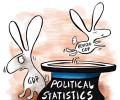
It is also likely to assume a deflator of around 4 per cent. That could take the nominal GDP outlook for FY21 to around 10 per cent. It is this nominal GDP forecast on the basis of which the finance ministry is calculating key Budget targets like the fiscal deficit as a percentage of GDP and tax revenue growth for the coming year.
India's economy has bounced back amazingly from the Covid-19 pandemic and nationwide lockdown over the last one year, but it is not out of the woods yet, according to the World Bank, which in its latest report has predicted that the country's real GDP growth for fiscal year 21/22 could range from 7.5 to 12.5 per cent.
The IIP growth number of 5.6 per cent in May 2011 over May last year is the lowest in nine months. A downward trend in IIP has been seen since December 2010, with brief interludes of good news.

Having recorded about 9 per cent growth rate in three consecutive years since 2005-06, India's growth rate fell to 6.7 per cent during 2008-09 on account of the impact of the global financial crisis. India recorded a growth rate of 6.1 per cent during the first quarter of this fiscal.
